

I got a slack message from a founder in tribeca last thursday morning. we increased facebook spend from 15k to 35k weekly and roas dropped from 3.2 to 1.8. what happened. i asked what input signals they were watching. what signals. i asked what guardrails they had set. silence.
This is how most ecommerce brands lose control of paid ads. revenue looks flat so they increase spend. spend goes up. roas drops. cost per customer rises. profit disappears. they scramble to figure out what changed but they dont know because they werent tracking the signals that predict performance before it breaks.
Scaling ecommerce paid ads isnt just increasing budget. its a system with input signals guardrails and decision rules that tell you when to push and when to pause. most teams only look at output metrics like roas and revenue. by the time those move the damage is done. you need leading indicators that show problems forming.
I work with ecommerce brands across new york scaling paid acquisition and the pattern that works is consistent. you define input signals that predict output performance. you set guardrails that trigger automatic responses. you increase spend incrementally while monitoring both. you catch deterioration early when its fixable not late when its expensive.
This article walks through exactly how to scale paid ads systematically so you grow revenue without destroying unit economics or losing control of what drives performance.
Why ROAS is a lagging indicator that lies to you
Heres what most ecommerce teams do. they check facebook ads manager or google ads. they look at roas. if its good they increase spend. if its bad they decrease spend. this is flying blind.
ROAS is a lagging indicator. by the time it drops the things that caused it to drop happened days or weeks ago. you increased spend. audience quality degraded. creative fatigued. conversion rate slipped. these all happened before roas moved. when you finally see roas drop youve already wasted budget on declining performance.
A skincare brand in williamsburg scaled this way. they hit 3.5 roas consistently for six weeks. they doubled spend. roas held at 3.4 for one week. then 2.9. then 2.3. they panicked and cut spend back. too late. theyd spent three weeks at degraded performance before they reacted. wasted 18k in margin.
What actually happened. when they doubled spend they expanded into lower quality audiences. their cost per click went up 40 percent. their landing page conversion rate dropped because the new traffic was less qualified. their add to cart rate fell. all of these are input signals. they all moved before roas moved. but the team wasnt watching inputs. they only watched outputs.
Input signals are leading indicators. they tell you performance is degrading before it shows up in roas or revenue. if you track inputs you catch problems when theyre small. if you only track outputs you react when problems are expensive.
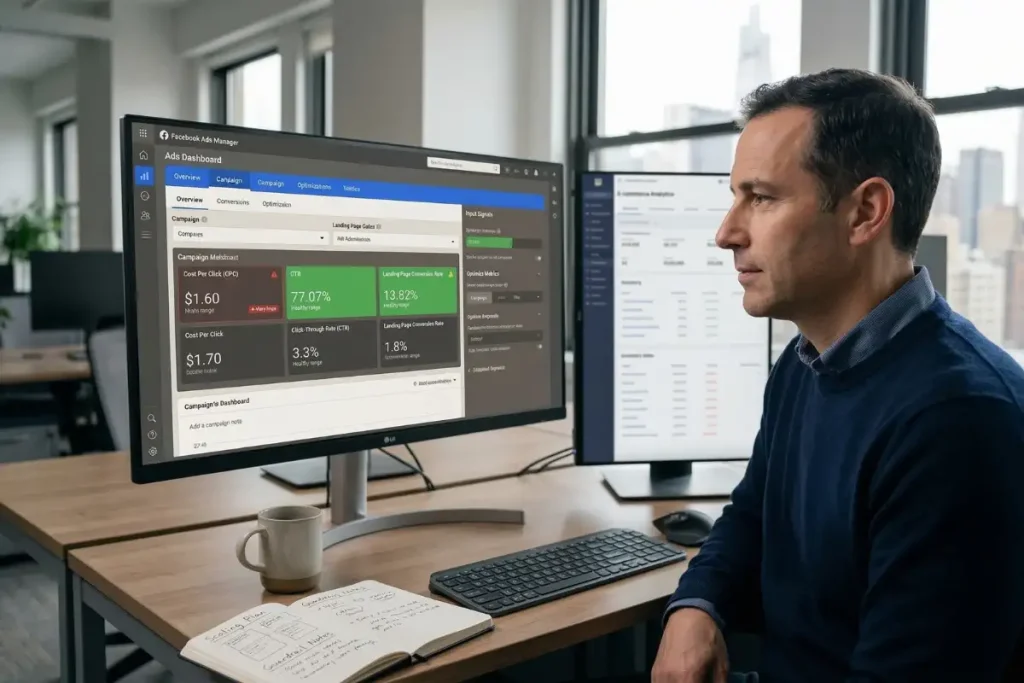
The inputs that matter for paid ads are cost per click. click through rate. landing page conversion rate. add to cart rate. cost per add to cart. these connect your ad performance to your funnel performance. when any of these move significantly your roas will follow in a few days. watching inputs gives you early warning.
A mens apparel brand in chelsea learned to do this right. they track five input signals daily. cpc. ctr. lpv to atc rate. atc to purchase rate. overall cpa. they have thresholds for each one. if cpc rises above 2.10 dollars or ctr drops below 1.8 percent or landing page conversion drops below 3.5 percent they investigate immediately.
Last month their cpc started climbing. went from 1.85 to 2.15 over three days. roas was still fine at 3.1. but the input signal said something was wrong. they dug in. their best performing ad set had hit audience saturation. frequency was spiking. they paused it and shifted budget to a fresh audience. cpc dropped back to 1.90. roas stayed healthy. they caught it before output metrics broke.
The incremental scaling framework that prevents blowups
Most ecommerce brands scale paid ads in big jumps. spending 10k weekly. revenue looks good. lets go to 25k. this creates chaos because you cant isolate what changed.
Incremental scaling means never increasing spend more than 20 percent per week. if youre at 10k you go to 12k. if performance holds you go to 14k. if something breaks at 12k you know the problem emerged in that 20 percent increase not across some massive uncontrolled jump.
This feels slow. it is slow. slow is how you maintain control. fast scaling is how you blow up unit economics and spend six weeks recovering.
A home goods brand in soho tried to scale from 8k to 30k weekly because they had budget and q4 was coming. roas crashed. creative fatigued. audiences saturated. conversion dropped. they pulled back to 8k and spent two months testing their way back to stable performance. if theyd scaled incrementally they would have hit 30k in maybe 8 weeks with healthy roas the whole way.
The incremental framework also lets you test hypotheses. when you go from 10k to 12k and roas drops you know something in that increment broke. you can investigate. is it audience saturation. is it creative fatigue. is it time of day. is it onsite conversion shifting. you have clean signal.
When you jump from 10k to 30k and roas drops you have no idea which of the twenty things you changed caused it. audience expansion. creative spread. bid changes. budget reallocation across campaigns. landing page traffic mix. all of it changed at once. good luck diagnosing.
A beauty brand in the financial district uses a scaling spreadsheet. they document every change. week 1 spend 15k roas 2.9. week 2 increase to 18k add one new ad set roas 2.8. week 3 increase to 21k refresh creative in top campaign roas 3.1. week 4 increase to 25k expand lookalike audience from 1 percent to 3 percent roas 2.4.
They know exactly what caused the roas dip. lookalike expansion. they roll it back. roas recovers. they try a different expansion method. this only works because changes are incremental and documented.
Guardrails that force you to pause before you break things
Heres where most teams fail. they see performance declining but they keep spending anyway. revenue is still coming in. roas is just a bit lower. well optimize our way out of it. two weeks later theyre unprofitable and dont know how it happened.
You need guardrails. automatic rules that force you to pause and diagnose when input signals cross thresholds. these remove emotion and momentum bias from the decision.
The guardrails i use with every brand are minimum thresholds for input metrics and maximum thresholds for cost metrics. if any metric crosses its threshold you pause scaling immediately. you dont debate. you dont give it another week. you pause and investigate.
Example guardrail set for a cookware brand in dumbo. cpc stays below 1.90. ctr stays above 1.5 percent. landing page conversion stays above 2.8 percent. cost per purchase stays below 65 dollars. if any of these break you stop increasing spend until you diagnose and fix.
Last quarter their cpc hit 1.95. they were at 22k weekly spend and planning to go to 26k. guardrail triggered. they paused the increase. dug into the data. two of their ad sets were hitting frequency above 4 which was driving up cpc. they paused those ad sets. launched fresh creative. cpc dropped to 1.75. then they resumed scaling. clean controlled process.
Without guardrails they would have increased to 26k with degrading performance. blown another 8k in wasted spend. eventually noticed roas dropping. scrambled to fix it. the guardrail caught it early when the fix was simple.
Guardrails also prevent panic decisions. when you have predefined thresholds and responses you dont make emotional calls. the system tells you what to do. metric crosses threshold. pause scaling. diagnose root cause. fix it. resume. this removes the am i overreacting or should i wait and see paralysis.
A jewelry brand in gramercy used to argue about whether performance was really declining or just normal variance. their weekly meetings devolved into debates. we set guardrails. now theres no debate. cost per add to cart above 18 dollars means pause. below 18 means continue. the metric decides not opinions.
The other critical guardrail is profit threshold. never scale if contribution margin per order drops below your target. if you need 25 dollar margin per order to hit your business goals and margin drops to 18 you pause regardless of what roas looks like. margin is what pays the bills not roas.
Input signal dashboard you can build in 30 minutes
You dont need fancy tools to track input signals. a google sheet pulls from facebook and google apis is enough. the key is daily updates and threshold alerts not sophisticated visualization.
The dashboard i build for brands has one tab per channel. facebook tab shows date spend impressions clicks cpc ctr landing page sessions landing page conversion cost per add to cart cost per purchase roas. every row is one day. conditional formatting highlights cells that cross thresholds.
This takes maybe 20 minutes to set up with api connections. zapier or google sheets built in connectors work fine. you dont need a data warehouse or business intelligence platform. you need the right metrics updating daily with visual alerts.
A skincare brand in nolita runs their entire paid ads operation off a google sheet. they open it every morning. scan for red cells. red means a metric crossed threshold. they investigate that day. usually takes 10 minutes to diagnose. another 10 to implement a fix. 20 minutes of daily discipline prevents week long recovery projects.
The inputs you track depend on your funnel but the structure is consistent. traffic metrics from the ad platform. conversion metrics from your site analytics. cost metrics calculated from both. thresholds based on your historical performance and unit economics.
For facebook you need cpc ctr frequency cost per landing page view landing page conversion rate cost per add to cart add to cart to purchase rate cost per purchase. for google you need cpc ctr conversion rate cost per conversion quality score. these predict roas movement 3 to 7 days ahead.
Once you have the dashboard the discipline is checking it daily and respecting the guardrails. a furniture brand in the west village built a great dashboard then ignored it for two weeks. when they finally looked three metrics had been red for 10 days. they lost 15k in wasted spend. the system only works if you use it.
Set up slack or email alerts if you want automation. when a metric crosses threshold it pings you. i prefer manual daily check because it keeps you connected to the data. but alerts work if your team needs the forcing function.
How to scale across platforms without losing control
Scaling one channel with guardrails is manageable. scaling facebook and google and pinterest and tiktok simultaneously is where most teams lose control. too many inputs. too many dashboards. too much complexity.
The solution is treat each channel as an independent system with its own input signals and guardrails. dont try to manage everything in one view. each platform gets its own dashboard and threshold set.
But you need one consolidated view of total spend and blended performance. this is your portfolio view. total spend across all channels. total revenue. blended roas. blended cpa. blended contribution margin. this tells you if your overall acquisition is healthy even if individual channels fluctuate.
A beauty brand in chelsea runs facebook google and pinterest. each channel has its own input dashboard. facebook team checks facebook inputs daily. google team checks google inputs. but every monday they review the portfolio view. total spend was 45k last week. total revenue was 165k. blended roas 3.7. blended margin 32 percent. all healthy.
Within that facebook roas was 3.2. google roas was 4.8. pinterest roas was 2.1. individually pinterest looks weak. but portfolio view shows its still profitable and diversifying risk. they keep it running at controlled spend while optimizing.
The mistake teams make is trying to get every channel to the same roas. channels have different roles. google branded search might run at 8x roas. facebook prospecting might run at 2.5x. both can be correct if your blended economics work.
Portfolio guardrails sit above channel guardrails. if blended contribution margin drops below target you pause all scaling across all channels. if individual channel crosses its guardrail you pause that channel. this creates layered protection against runaway spend.
Frequently asked questions
how fast can we realistically scale paid ads without breaking performance
20 percent per week is the safe increment for most ecommerce brands. if youre spending 10k you can go to 12k next week. this assumes your input signals stay healthy and guardrails dont trigger. some brands can push 30 percent if they have strong creative production and wide addressable audiences. below 20 percent youre being too conservative. above 30 percent youre risking control.
what if our guardrails trigger constantly and we can never scale
Then you have a fundamental performance issue not a scaling issue. your unit economics are fragile. your creative fatigues too fast. your audiences are too narrow. your conversion rate is too low. fix the foundation before you try to scale. scaling magnifies what you already have. if what you have is unstable scaling makes it worse not better.
should we use platform auto bidding or manual bidding when scaling
Start with manual bidding until you understand your input signals and thresholds. automated bidding obscures what drives performance. once you have 60 days of stable manual performance you can test automated bidding like target roas or target cpa. but keep tracking input signals. automation can mask degradation until its severe. manual gives you more control during the learning phase.
Conclusion
Scaling ecommerce paid ads without losing control isnt about budget size or platform choice. its about input signals guardrails and incremental increases. you track the metrics that predict performance before it breaks. you set automatic thresholds that force investigation when things drift. you increase spend in controlled increments that let you isolate cause and effect.
Most brands scale by feel. revenue looks flat so increase spend. roas drops so panic and cut. this creates expensive volatility. systematic scaling creates predictable growth.
Build your input dashboard. set your guardrails. scale 20 percent per week while monitoring signals. pause when thresholds break. diagnose and fix. resume scaling. repeat until you hit your revenue target or your next constraint.
The discipline is respecting the system even when you want to push faster. even when revenue is good and you have budget. even when q4 is coming and you feel pressure. the guardrails exist to protect you from yourself. use them.
Ready to scale paid ads without destroying unit economics. map your input signals. set your thresholds. build your dashboard. start with 20 percent increases. watch the signals daily. let the system tell you when to push and when to pause.